What a demo reel is for
A demo reel is a short audio file made of clips that show how you sound on the kind of work you want. Casting directors, producers and agents use it to hear your range and find the clip closest to the job in front of them, and some book directly from it.
That last part matters. The person listening is usually not deciding whether you are talented. They are deciding whether you are right for one specific script, often with a list of other voices to get through. A reel that makes that decision easy gets you further than one that tries to show everything you can do.
One reel per kind of work
Commercial, narration, corporate, audiobooks, animation and video games are cast by different people listening for different things. Separate reels for each strand, each clearly labelled by genre, work better than one reel that tries to cover them all.
Start with the work you are booking or want to book now. A newer voice actor often starts with a commercial reel and a narration clip; animation and games reels come once there is material and experience to fill them.
A practical test: if a producer searching for a documentary narrator lands on your page, can they reach a narration reel without hearing a car advert first?
What goes in a reel
Each reel is a set of short clips, each one a different read within the same kind of work: a warm one, a bright one, a serious one, a conversational one. For long-form work such as audiobooks, one sustained clip shows you can hold attention over time better than several short ones.
The first clip
Put the read that sounds most like you first. Open with your most natural, effortless clip, because it reflects you best, then alternate contrasting energies and tones so the reel keeps moving.
Many listeners stop early. Whatever they hear first should be enough to decide.
Scripts and production
Use scripts that sound like real current work in that genre. Do not lift lines from existing shows, games or adverts; write or commission originals. Record in a quiet, treated space and have the reel produced well: music, effects and edit should support the read, never cover it.
What to leave out
- A vague title. “Megamix” or “Voice reel 2” tells a producer nothing. Name the reel after the work: “Commercial”, “Documentary narration”, “Audiobooks, fantasy”.
- An accent you cannot hold. Show your real accent, and others only if you can sustain them for a whole job.
- Clips you would not want to be booked for. Every clip is an invitation to more of the same.
- Old material. If your voice or your best work has moved on, your reel should too.
- Implied credits. A spot you wrote for the demo is fine; presenting it as aired work for a real brand is not.
How long should it be?
There is no single standard, and advice varies by genre and by market. What everyone agrees on is that shorter and stronger beats longer and complete. If a casting notice asks for a length or a number of clips, follow it exactly.
Presenting the reel on your website
Most demo reel advice stops once the file is finished. But a producer rarely hears your reel in isolation: they hear it on your website, a casting platform or an agent’s page, and the page around it decides whether they press play at all.
Put a play button on the first screen
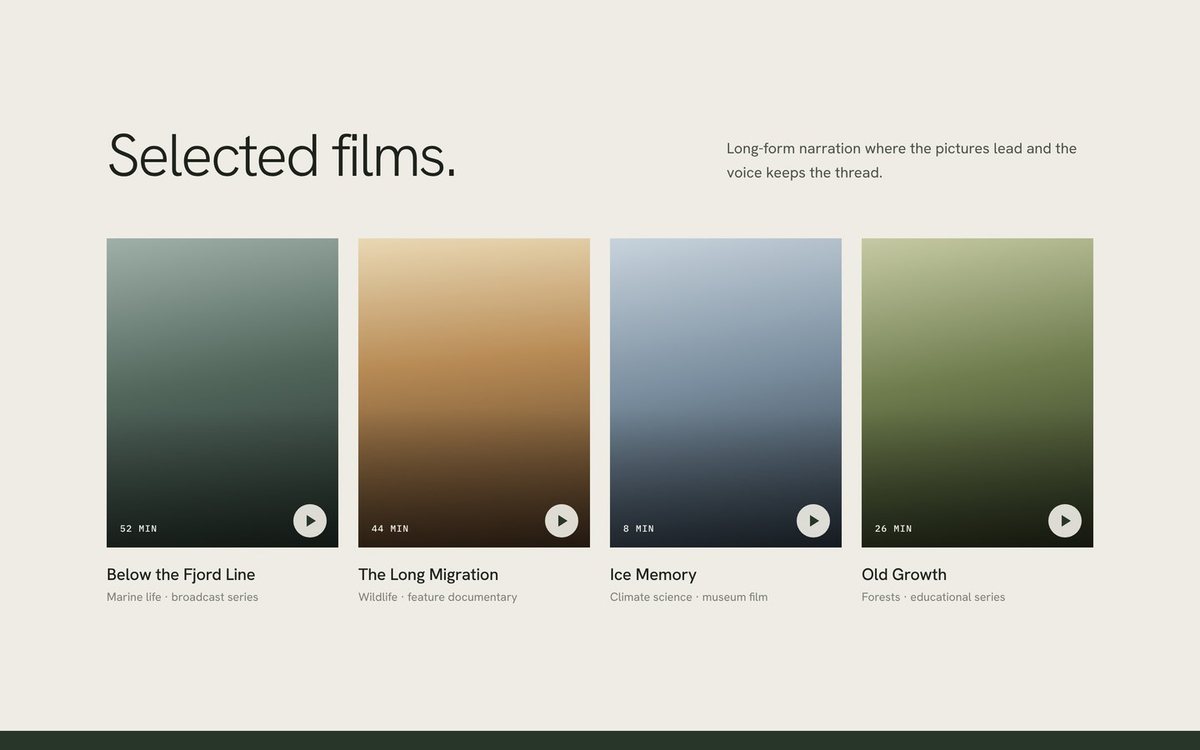
Your reels belong on the first screen of your homepage, not on a separate “Demos” page behind a menu. One tap should start the right reel, on a phone as well as a laptop.
Label reels the way producers search
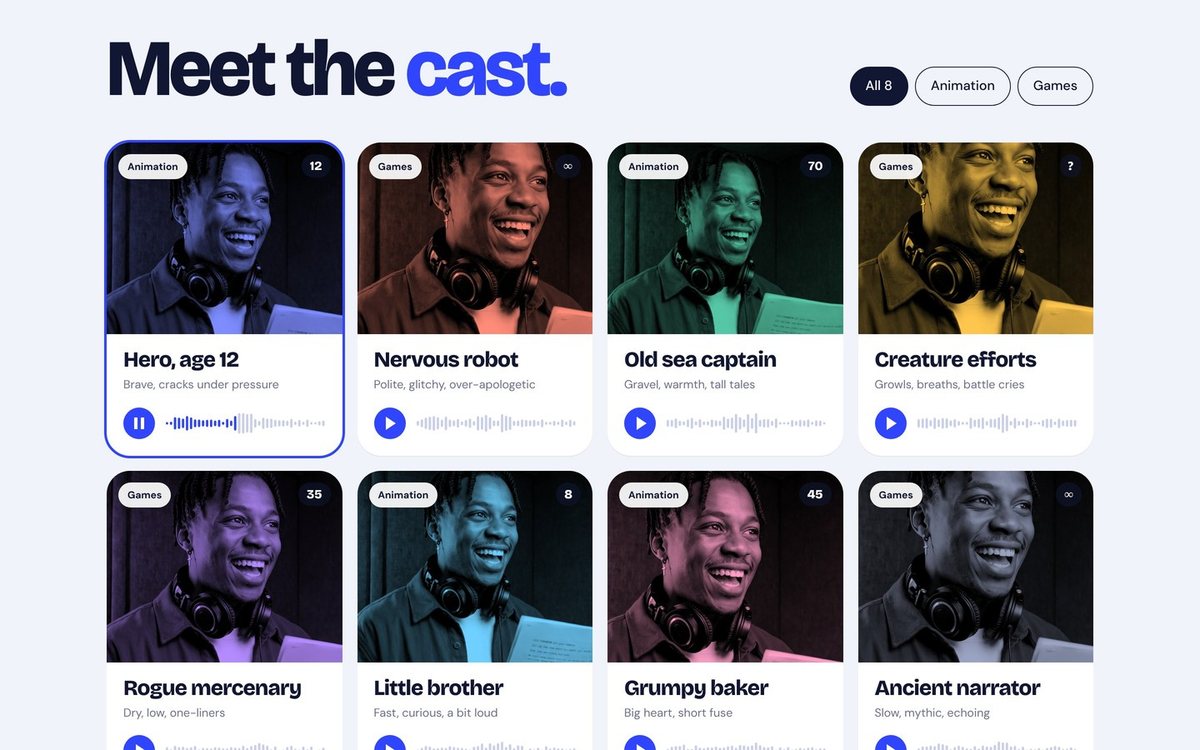
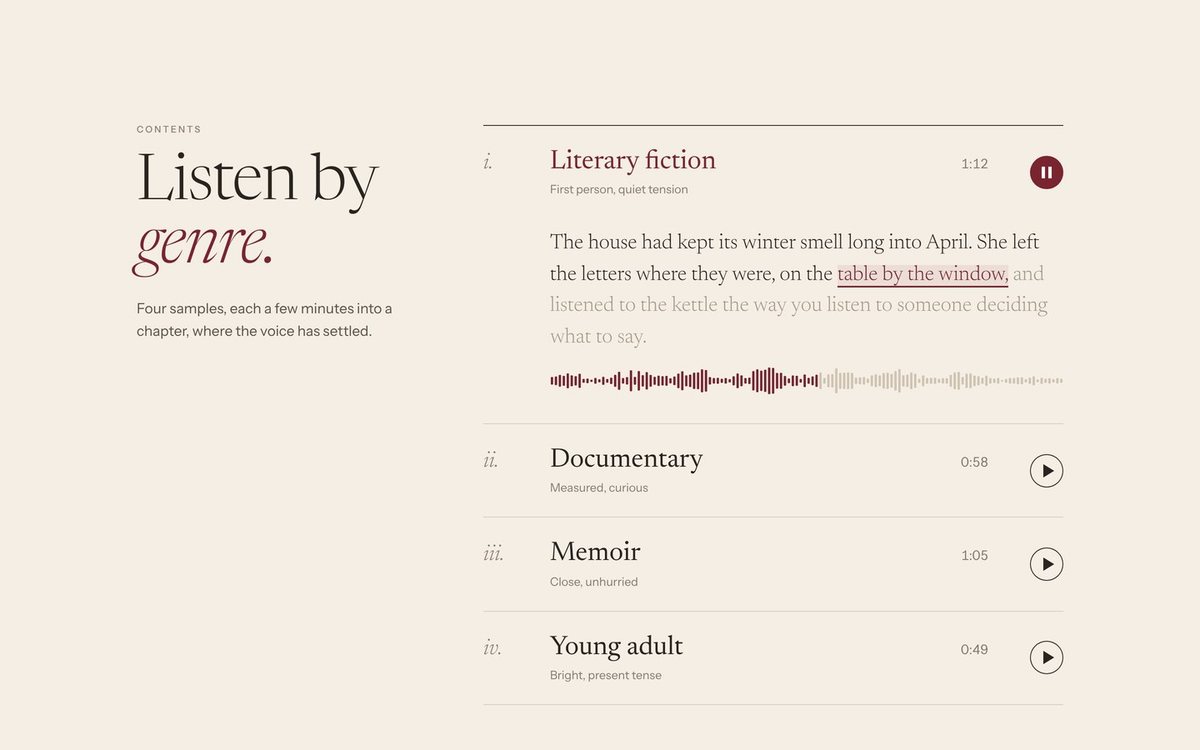
Label each reel by the kind of work, then by language or register where it helps: “Commercial · English”, “Narration · documentary”, “Characters · games”. A producer should know what they are about to hear before they press play.
Order reels by the work you want most
The first reel on the page is the one most people hear. Lead with the work you want more of, not the reel you made first.
Never autoplay
Audio that starts on its own is jarring, and most browsers block it anyway. Let the visitor choose. Show the length of each reel so they know what they are committing to.
Give every clip words
Add a short line under each reel saying what it contains, and a transcript of the scripts. It helps visitors who cannot listen at that moment, makes the page accessible, and gives search engines something to read.
Make reels easy to pass on
Producers forward links. Give each reel a clear file name with your name and the genre, for example nora-lindqvist-documentary-narration.mp3, and let people reach a reel through its own link so it can be sent to a client.
Keep the page fast
Load audio only when someone presses play, not when the page opens. The page should appear immediately, even on a weak mobile connection.
A checklist before you publish
- One reel for each kind of work you want, each with a clear title.
- The most natural, strongest read first in every reel.
- Original scripts, clean recording, music and effects under the voice.
- Reels on the first screen of your site, one tap from playing, with no autoplay.
- Labels by kind of work, language and register, with each reel’s length.
- A transcript or a line of description for every reel.
- A file name and a link for each reel that make it easy to forward.
- A way to book you right next to the reels.